
Entry-level ultrasound technician salary:. The question I’m asked almost every week is something like this: “How much will I actually make once I graduate??” I have been working with imaging students and new graduates for years. There is no simple number that is the answer.
Your beginning salary is in the range. Let’s get to the point. The average salary range for an entry-level ultrasound technician in the U.S. is between $55,000 and $70,000 per year.
The median for all diagnostic medical sonographers, new grads and 20-year veterans combined, is $89,340 in May 2024, according to the Bureau of Labour Statistics.
New sonographers typically start out with lower salaries. Their earning potential, however, grows as they become more experienced and specialised and is dependent on the entry-level ultrasound technician salary.
What “Entry-Level” Actually Means Here
An entry level is someone who is in their first year or two in the position. Typically, a graduate of an accredited sonography programme, holding or pursuing an ARDMS credential.
None of that is what a student in clinical rotations is doing, and it’s before a student has three or four years of experience and a second speciality. The majority of the pay at this stage is based on competence and independent scanning.
It’s not yet reached the additional income from being older or having a speciality add-on, and that’s a natural progression — all the sonographers I’ve spoken with have experienced the same growth.
Entry-level ultrasound technician salary:
I like to use more than one tracker here, as no one tracker is the whole story alone.
- The average salary range for entry-level sonographers by the nation is $55,000 to $70,000 per year.
- Payscale’s low-end estimate: Average base hourly wages are about $27.98, with the low end at about $21 and the high end at about $34, and the total pay for the job is somewhere around $45,000 to $72,000 when shift differentials and overtime are included.
- BLS national median (all experience levels): $89,340 May 2024. A lot of first-year techs are in the bottom 10% of all sonographers, making less than $64,760.
- Bigger picture: Glassdoor’s wider range of experience levels is $71,383 to $122,109, so you still have a ballpark idea of where the entry rungs of that ladder start.
None of these figures assure a six-figure debut, and I would not deceive you. However, in comparison to the majority of other allied healers who possess two years of education, it is relatively unimpressive.
I would be dishonest if I claimed anything other than six digits on the first day. However, when compared to the majority of other two-year allied health professions, this represents a robust foundation — and the trajectory for advancement from this point is among the most favourable I have observed in the healthcare sector.
Why Two Grads Can Get Very Different Offers

I have observed peers from the same cohort receiving offers that differ by $15,000 or even greater. This generally explains the disparity.
Where you work. This is more important than any other on this list. Some states, such as California, Hawaii, Washington, Oregon, and Connecticut, have median sonographer salaries that are 20-30% higher than those in rural areas, but the extra cost of living in these states also takes a bite out of the difference.
Who you work for. Speciality labs and outpatient imaging centres are typically slightly higher than general hospitals. They generally require new sonographers to perform more scans. Hospitals have a better mentorship and a more diverse number of cases.
Any qualifications you have. Employers nearly always pay higher for candidates who are registered as ARDMS vs. just registry-eligible. If you are able to sit for boards before you graduate, then do it when you are offered the seat. It’s truly the only lever you have that you can control before the first offer even hits the table.
Your shift. Rotations are typically accompanied by a pay increase, especially on evenings, weekends and on-call rotations. These changes are preferred by many new graduates, as they allow them to earn more money in a shorter period of time.
Your speciality track. Cardiac and vascular sonography are a little higher on the list than the other abdominal or OB imaging specialities, even for a new grad. That’s primarily due to the fact that there are fewer programmes that train people in those specialities. Therefore, the availability of qualified graduates remains less than the demand for them.
Your negotiation. I know that this one is always forgotten. Many new graduates accept the first job that comes along because they need a job. I comprehend. Nonetheless, even a minor counter-offensive, supported by authentic local data, often shifts the balance more often than one might assume.
Where Entry-Level Fits Into the Bigger Picture
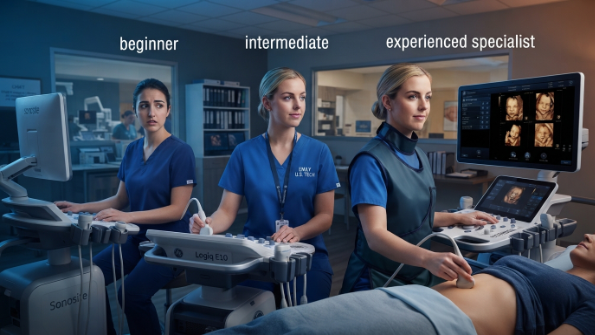
The starting wage for the majority of novice sonographers is between $55,000 and $70,000. That figure escalates to $75,000-$90,000 after three to five years — generally just after obtaining a second ARDMS specialization.
After 10 or more years of experience, particularly if you have cardiac or vascular credentials or are in a lead or supervisory position, $90,000 to more than $100,000 is not uncommon, and for top performers in high-cost states and management, the numbers exceed $120,000.
I am not assuring any certain figure here. This domain allows for relatively reliable wagers on intentional expertise. Not every allied health profession is characterised in that manner.
Is Sonography Still Worth It in 2026?
I receive this inquiry nearly as frequently as questions regarding compensation, and the response is affirmative, albeit with a stipulation. The Bureau of Labour Statistics indicates that the diagnostic medical sonography sector is projected to witness a 13% increase in employment by 2034. Consequently, exceeding the national mean, primarily attributable to an elderly demographic necessitating more regular imaging.
That is not a marketing demand; that is a real demand. What I tell students is this: don’t pursue this field just for the number of the entry level, as it will not impress you in year one. Pursue it, since the ceiling is continually being raised as more credentials are added and since a two-year associate degree offers this much long-term earning potential in few other healthcare fields.
Real Sonographers, Real Career Paths
Numbers don’t tell the whole story—so it’s good to hear from people who have experienced it firsthand.
Tom Whelan, RDMS, RDCS, RVT, and FASE, has been in sonography for almost 35 years and acquired three different ARDMS specialities. His published interview with Ultrasound Schools Info is a good example of the same pattern that I outlined above: building on one thing and then adding more on top of it over the years.
Chelsey Wright, BS-MIRS, RDCS (AE, PE), RDMS, is an echocardiographer whose study resulted in one of the top ten most downloaded articles in the Journal of Diagnostic Medical Sonography. Her interview exemplifies how specialization, combined with actual participation in the research of the field, can lead to opportunities beyond the scope of a typical staff position.
In only a few years after his first year as a sonographer, Carlos Reveles, RDMS, a high-risk OB/GYN sonographer, was named Sonographer of the Year for West Texas by his employer. The interview is a reminder that there are some subspecialties that are very competitive to be recognized in and to earn a lot of money in.
My Tips for Growing Your Sonography Salary Faster
Experienced sonographer mentoring a new ultrasound technician
Become ARDMS certified BEFORE your first shift, not after – it is the quickest way to increase your starting offer, and it will cost you nothing but time that you already have in your last semester.
After two or three years, add another speciality: abdominal-plus-OB or general-plus-vascular sonographers make more and more than single-speciality sonographers.
The first place you work, not the number on the offer letter, is the place you get case exposure and mentorship, and that will be reflected in your next job search as well.
If you still haven’t decided on a track, you should consider cardiac or vascular. If the training pipeline is lower than the demand, then the pay will follow. Also, do not enter into salary negotiations without first researching the local pay rates.
The averages of a county apart can differ more than you’d think. Their presence with actual figures alters the course of the entire discussion.
How I’d Negotiate My First Offer
If I were interviewing myself right now, I would walk in with information on local wages, not the national average from a random search result.
The shift differential would be my first question, as would be the question of whether tuition assistance or continuing education support is available and how raises are determined after year one, as these questions are as important as the base number.
Also, I would not accept the first offer without a second conversation. Most employers will expect it, and just about no one will rescind a job offer because you asked a fair question.
Conclusions

Registered ultrasound technician in a modern diagnostic imaging department
The average salary for an entry-level ultrasound technician in the U.S. is $55,000 to $70,000 annually, or approximately $26 to $34 per hour. In May 2024, the overall median salary for all sonographers was $89,340, and new graduates begin at a lower salary than this.
The top three factors that separate two comparable graduates from a job offer are location, employer type, shift, credentials at hire and negotiating. The best way to accelerate your income is to add a second specialty during the first few years.
Frequently Asked Questions
What is the average entry-level ultrasound technician salary in the United States?
Most new sonographers earn between $55,000 and $70,000 in their first one to two years, with entry-level hourly pay averaging around $28.
How quickly does sonography pay increase after entry level?
Many sonographers see real jumps within three to five years, especially after adding a second ARDMS specialty. Mid-career pay often lands between $75,000 and $90,000.
Which state pays entry-level ultrasound technicians the most?
California, Hawaii, Washington, Oregon, and Connecticut consistently post the highest median sonographer wages, though living costs run higher there too.
Do I need RDMS certification to get an entry-level sonography job?
Most employers prefer or require ARDMS registration, and many pay more to candidates who are already certified at hire rather than registry-eligible.
Which ultrasound specialty pays the most starting out?
Cardiac (echocardiography) and vascular sonography tend to pay slightly above general abdominal or OB/GYN imaging, even at entry level.