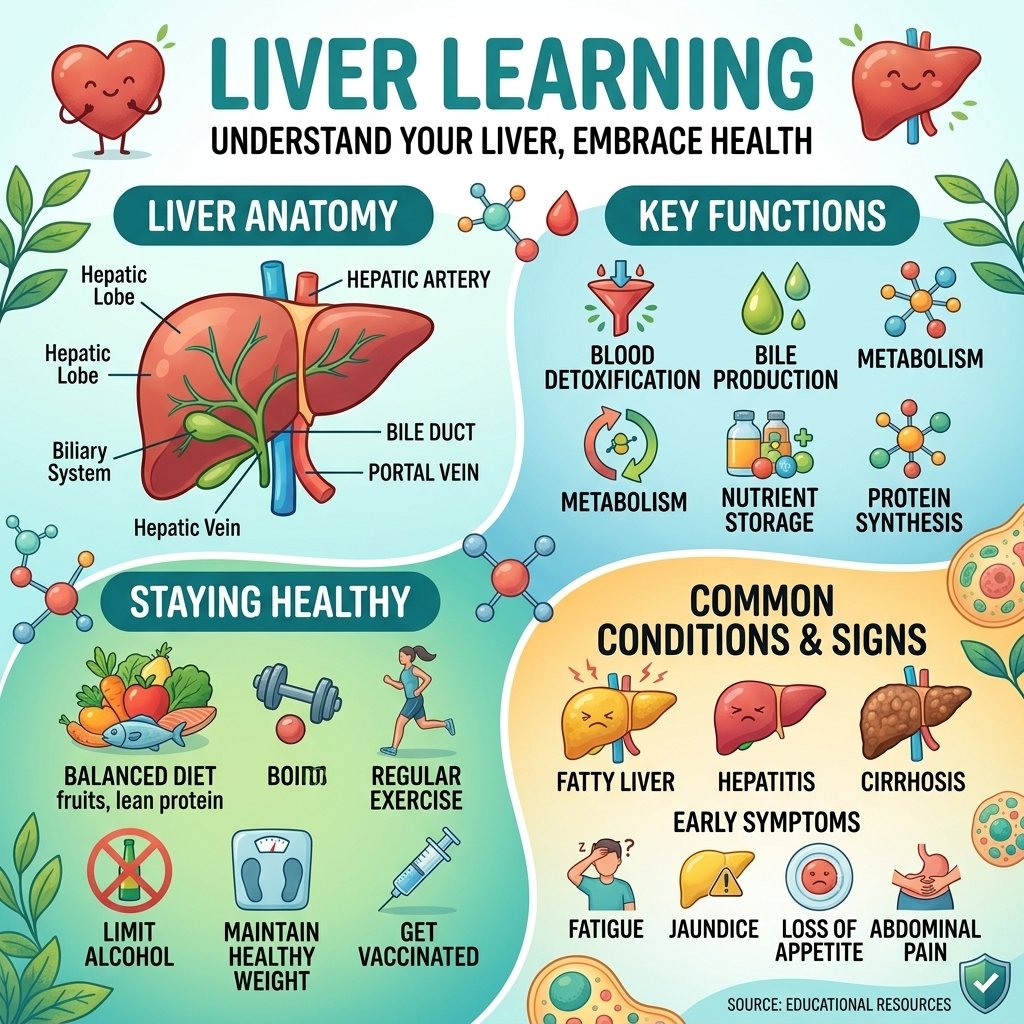
Liver ultrasound, or liver sonography, is one of the most frequently done exams in diagnostic medical imaging. Because of its non-invasive nature, its ability to take real time images and used as initial imaging modality.
Liver ultrasound is one of the most frequently performed abdominal examinations and is often the first imaging modality that is employed to assess liver disease. To acquire diagnostic images, it is important to know the normal liver anatomy and the important sonographic landmarks.
Here is an easy-to-follow guide to the structure of the liver.
Table of contents :
- Surface Anatomy of liver
- Sono anatomy of liver
- Preparations
- Views
- Measurement list
- Check list
Position and features on the body surface
The liver is located in the: R
Right upper quadrant (RUQ)
• Epigastric region
• Part of the left upper quadrant
It is located under the diaphragm and covered by ribs.
Remember: Most of the liver is hidden behind the rib cage., so during liver ultrasound intercostal
scanning is often necessary.
Patient preparation:
To reduce interference from bowel gas, the patient should ideally fast for at least six hours before to a liver ultrasound scan. Grayscale B-mode imaging is used for the evaluation, with Doppler studies added if needed.
Patient Position
When performing routine liver ultrasound:
- patient should be in Supine position
- The arm raised above the head.
Alternative Positions
• Left lateral decubitus
• Slight oblique position
Probe Selection
Curvilinear Probe (2–5 MHz)
Ideal for:
• General liver examination
• Deep structures
• Most adult patients
Phased Array Probe
Useful for:
• Intercostal windows
• Bedside and POCUS examinations
Linear Probe (7–12 MHz)
Useful for:
• Superficial lesions
• Pediatric imaging
• Detailed vascular evaluation
Scanning technique:
For liver ultrasound follow this :
- Start with an extensive sweep of the liver to begin with.
- The patient should take deep breaths to completely visualize the superior borders of liver.
- From a subcostal approach look up and down the left lobe in the transverse direction
- Examine in the right lobe in the sub costal or inter costal direction.
- Carefully roll the patient onto their left side and assess the Rt lobe after checking for fluid. I
- in a subcostal approach the liver may be obscured by bowel gas and it may be necessary to have the patient distend their abdomen in order to get a better picture.
- intercostal, between the ribs, can also be a good way to ensure good visualization
Scanning Approach
The following should be part of a complete liver ultrasound examination:
I-Subcostal View: is obtaining through placing the probe just below the right ribcage and angling it upward beneath the diaphragm.
Best for:
- Left lobe
- Portal vein
- Hepatic veins
- Porta hepatis
ii-Intercostal View: is obtaining when bowel gas or rib cage block the standard subcostal view then its provide the best window for visualization of right lobe
in this ask the patient to hold the breath this push the liver below the ribcage and provide best image .
Best for:
• Right lobe
• Hepatic dome
The two segments of the body are known as segment VII and VIII.
iii-Sagittal Plane
Shows:
• Long axis of the liver
A.inferior vena cava (IVC)
• Hepatorenal interface
iv-Transverse Plane
Demonstrates:
• Portal bifurcation
• Right and left lobes
• Hepatic veins
Normal Liver Echotexture
| If liver is slightly brighter then kidney then look for steatosis ( fatty liver) |
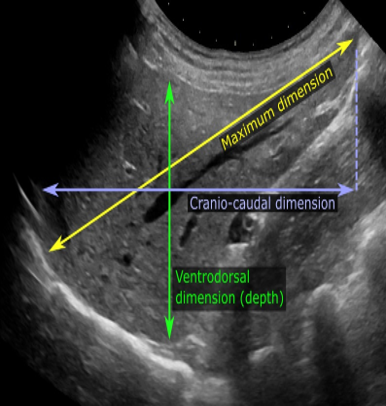
A normal liver appears:
- Homogenous parenchymal echogenicity
- Smooth borders
- Liver normal size less then 17cm
Liver lobes
Right lobe: is the largest one.
In this we can access
- Segment V,VI,VII and VIII
We can access the right lobe with intercostal approach .
Left lobe: is located in epigastrium
In this we can access
- Segment II ,III and IV
We can access the left lobe with subxiphoid approach.
Caudate lobe
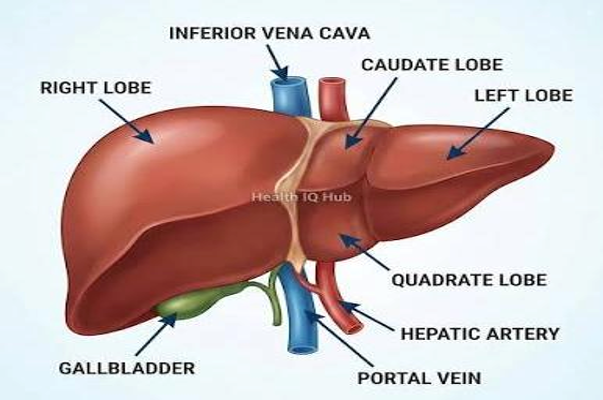
In this we can access segment-I
Found anterior to the IVC and posterior to the portal vein.
Sonographic landmarks
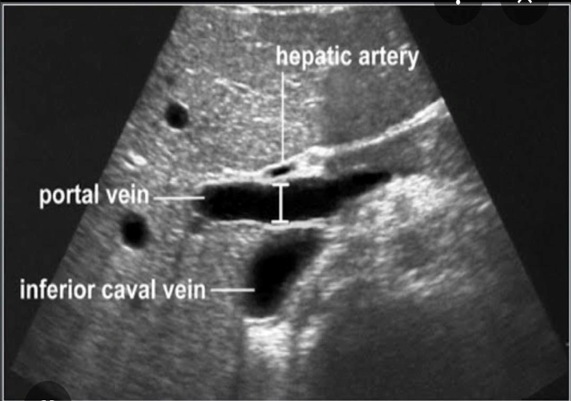
Portal Vein
Portal vein is the most important landmark
Sono-appearances
- Thick echogenic walls
- Branches into right and left portal veins
Remember: starry appearances on liver parenchyma
Hepatic veins
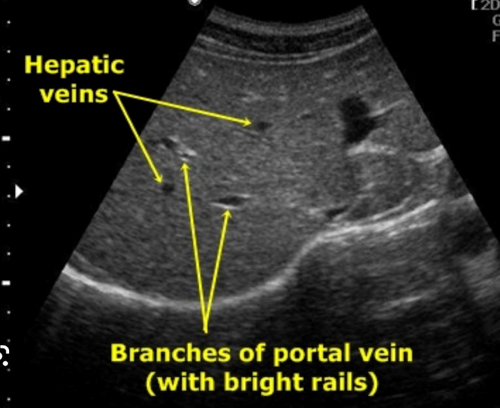
- Right hepatic vein
- Middle hepatic vein
- Left hepatic vein
Sono- appearances:
- Thin walls
- Toward IVC
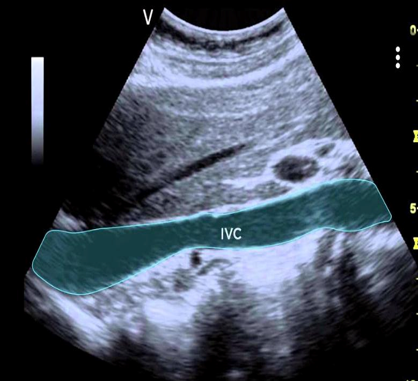
Inferior vena cava (IVC)
Is located posteriorly
Portal vein and hepatic veins drain into IVC.
Sono appearances
- Thick walls
- Presented vertically and with respiration change caliber
Ligamentum Teres
Is remnant of umbilical vein
Sono appearance
- Echogenic band in left lobe
- Its landmark for the identifying segment IV
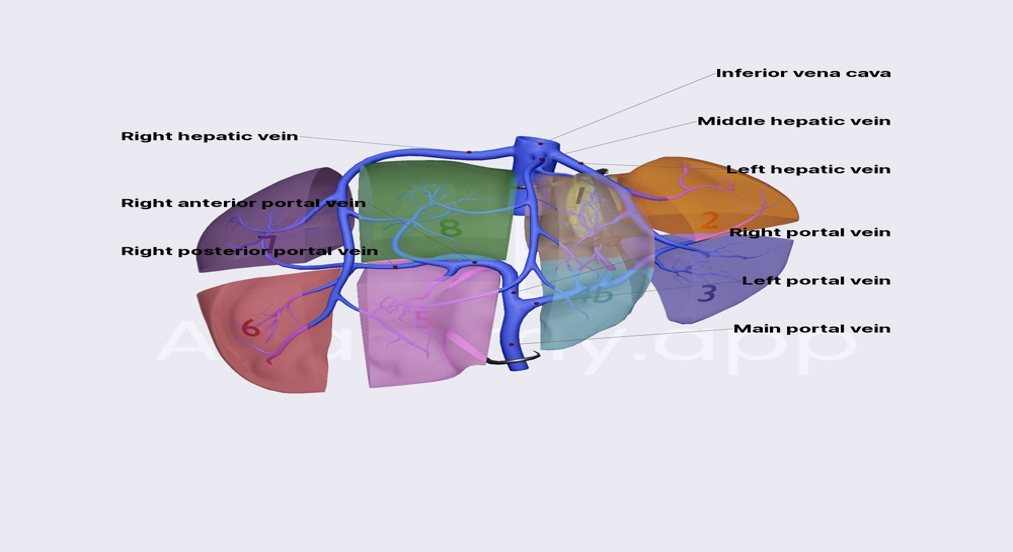
Couinaud segments simplified
Liver is divided into eight segments
Segment -I
In this caudate lobe is present
Segment -II and III
Left lateral lobe ( left of hepatic vein and falciform ligament )
Segment -IV
Left medial lobe ( between left and middle hepatic veins )
4a- superior (above )
4b-inferior ( below )
Segment V and VIII
Right anterior section
V is located below and VIII I located above the portal plane between middle and right hepatic veins
| Memory trick Clockwise from left lobe II-III-IV-V-VI-VIII |
Segment VI and VII
Right posterior section
Normal Measurements
| Structure | Normal Size |
| Liver length | <15–16 cm |
| Portal vein | <13 mm |
| Common bile duct | <6 mm |
| IVC | Variable |
| Hepatic artery | <7 mm |
Frequently asked questions (FAQs)
Is liver ultrasound is performed for a variety of reasons ?
It is used to assess fatty liver, cirrhosis, liver enlargement, masses and other liver diseases.
Is it necessary to have an ultrasound of the liver before fasting?
Yes, it is usually recommended to fast for 6-8 hours to get better images.
Is liver ultrasound is painful ?
Not at all, liver ultrasound is safe, painless and non-invasive.
Liver ultrasound can be used to detect fatty liver ?
Yes, fatty liver changes are often detected by ultrasound.
On ultrasound, what is the normal size of the liver?
The liver is normally about 15–16 cm long in adults.
Does Doppler play a role in liver ultrasound?
The Doppler can be used to evaluate blood flow in the vessels of the liver.


Excellent and highly informative blog! The content is well-structured, easy to understand, and provides valuable insights. I especially appreciated the practical explanations and clear presentation of key concepts. Looking forward to reading more of your work. Keep up the great effort!
Infomative Great content